How Bitcoin Was Actually Born: A Mailing List, a Newspaper Headline and Nine Pages
Researched and drafted with AI assistance from published sources; edited and published by NorwegianSpark SA.
Last updated: October 2026 · 5 min read
This article is for informational purposes only and does not constitute financial advice. Always consult a qualified financial adviser before making investment decisions.
Most technologies arrive with a launch. Bitcoin arrived as an attachment.
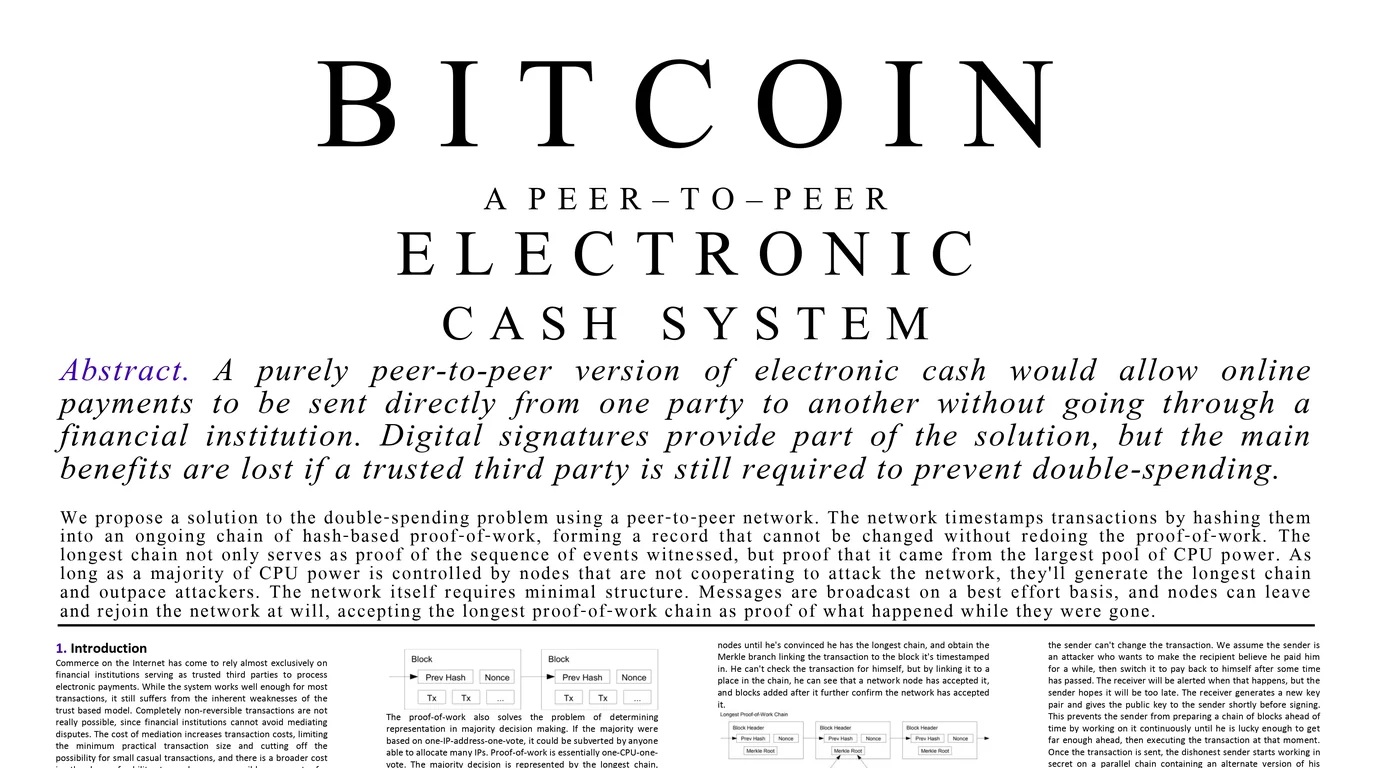
On 31 October 2008, someone using the name Satoshi Nakamoto posted to a cryptography mailing list: "I've been working on a new electronic cash system that's fully peer-to-peer, with no trusted third party." Attached was a nine-page paper, Bitcoin: A Peer-to-Peer Electronic Cash System.
The world was six weeks past the collapse of Lehman Brothers. That timing is not incidental, and Nakamoto made sure nobody could miss it.
The Message in the First Block
On 3 January 2009, the first block of the bitcoin blockchain — the genesis block — was created. Buried in its data is a line of text:
"The Times 03/Jan/2009 Chancellor on brink of second bailout for banks"
It is the front-page headline of that day's London Times. It serves two purposes at once. Technically, it proves no blocks were mined before that date — you cannot fake a newspaper headline into the past. Politically, it states exactly what the system was built in response to.
On 12 January 2009, Nakamoto sent 10 bitcoin to a cryptographer called Hal Finney — the first bitcoin transaction between two people. Finney had replied to the original mailing list post and become the first person other than Nakamoto to run the software.
The Problem It Solved
Digital cash had been attempted repeatedly through the 1990s. Every attempt broke on the same rock: double spending.
A digital file can be copied perfectly. If your money is a file, you can spend it twice. Every previous system solved this by appointing a trusted party — a bank, a company — to keep the authoritative ledger and refuse the second spend. That works, and it means the system has an owner who can be pressured, hacked or simply go out of business.
Nakamoto's contribution was not encryption, digital signatures or peer-to-peer networking. All three already existed. It was a way to get thousands of strangers, with no reason to trust each other, to agree on a single ordering of transactions without anyone being in charge.
The mechanism, in plain terms:
That is the whole idea. The rest is engineering.
Why 21 Million
Bitcoin's supply is capped at 21 million coins, and the schedule is fixed in the code. New coins are issued to miners as a block reward, and roughly every four years — every 210,000 blocks — that reward halves.
This is the deliberate opposite of a central bank. There is no committee that can decide to issue more, and no crisis that changes the schedule. Whether that is a strength or a flaw is the argument the entire asset class is still having: predictable scarcity is attractive if you distrust monetary discretion, and unhelpful if you think an economy sometimes needs it.
Then Satoshi Left
Nakamoto worked on bitcoin publicly for about two years, handed control of the code repository to developer Gavin Andresen, and in 2011 stopped posting. No sale, no announcement, no cashing out. The coins believed to have been mined by Nakamoto in the earliest days have never moved.
The identity has never been established. Numerous people have been named, several have claimed it, none has produced the one piece of evidence that would settle it: a signature from the known early keys.
The disappearance matters more than the mystery. A system that claims to have no controlling authority is much easier to believe when its creator genuinely walked away — and never touched a fortune to do it.
Frequently asked questions
Who received the first bitcoin transaction?
On 12 January 2009, Satoshi Nakamoto sent 10 bitcoin to a cryptographer called Hal Finney, completing the first transaction between two people. Finney had previously replied to the initial mailing list post and became the first person other than Nakamoto to run the software.
What message is contained in bitcoin's genesis block?
Created on 3 January 2009, the genesis block contains the text The Times 03/Jan/2009 Chancellor on brink of second bailout for banks. This front-page headline from the London Times proves technically that no blocks were mined before that date and states politically what the system was built in response to.
What is the supply limit for bitcoin?
Bitcoin supply is capped at 21 million coins, with the schedule fixed in code. New coins are issued to miners as a block reward, and roughly every four years, or every 210,000 blocks, that reward halves. Unlike central banks, no committee exists that can decide to issue more or change the schedule.
What The Origin Story Should Tell You Today
Read the source, not the summary. The whitepaper is nine pages and mostly plain English. Almost everything confidently asserted about bitcoin online is a summary of a summary.
Trustlessness has a price, and it is paid in personal responsibility. No central party means no password reset, no fraud department, no reversal. The same property that makes the ledger censorship-resistant makes a forgotten password permanent and a discarded drive unrecoverable.
"Blockchain" is not a synonym for bitcoin. Bitcoin is one specific set of trade-offs — slow, expensive to write to, extremely hard to rewrite. Most things marketed as blockchain products keep a trusted operator and therefore keep the failure mode Nakamoto was trying to remove.
The 2008 context is the design brief. The genesis-block headline is not decoration. Bitcoin was built by someone who wanted a money supply that no institution could expand at will. Whether you agree with that premise should shape how much of your savings you put anywhere near it.
If you are moving from reading to holding, best crypto wallets 2026 is the practical next step, and the story of the 10,000-bitcoin pizza is what happened the first time anyone spent it.
Nothing here is financial advice. Crypto assets are volatile and you can lose everything you put in.
Related reading: Bitcoin vs Ethereum vs Solana: How the Big Three Actually Differ
Related Articles

Bitcoin Basics for Beginners
Bitcoin for beginners: what Bitcoin is, how it works, the honest case for and against, your custody choices and the mistakes that cost new holders money.
Bitcoin vs Ethereum vs Solana: How the Big Three Actually Differ
Bitcoin vs Ethereum vs Solana compared: consensus, supply, fees and trade-offs, and which job each chain is built for. Not advice; capital at risk.

Best Crypto Cards 2026: Non-Custodial vs Custodial Debit Cards Compared
Crypto cards for 2026 compared custody-first: non-custodial COCA vs custodial Nexo and Coinbase cards, fees, FX and where each works. Capital at risk.