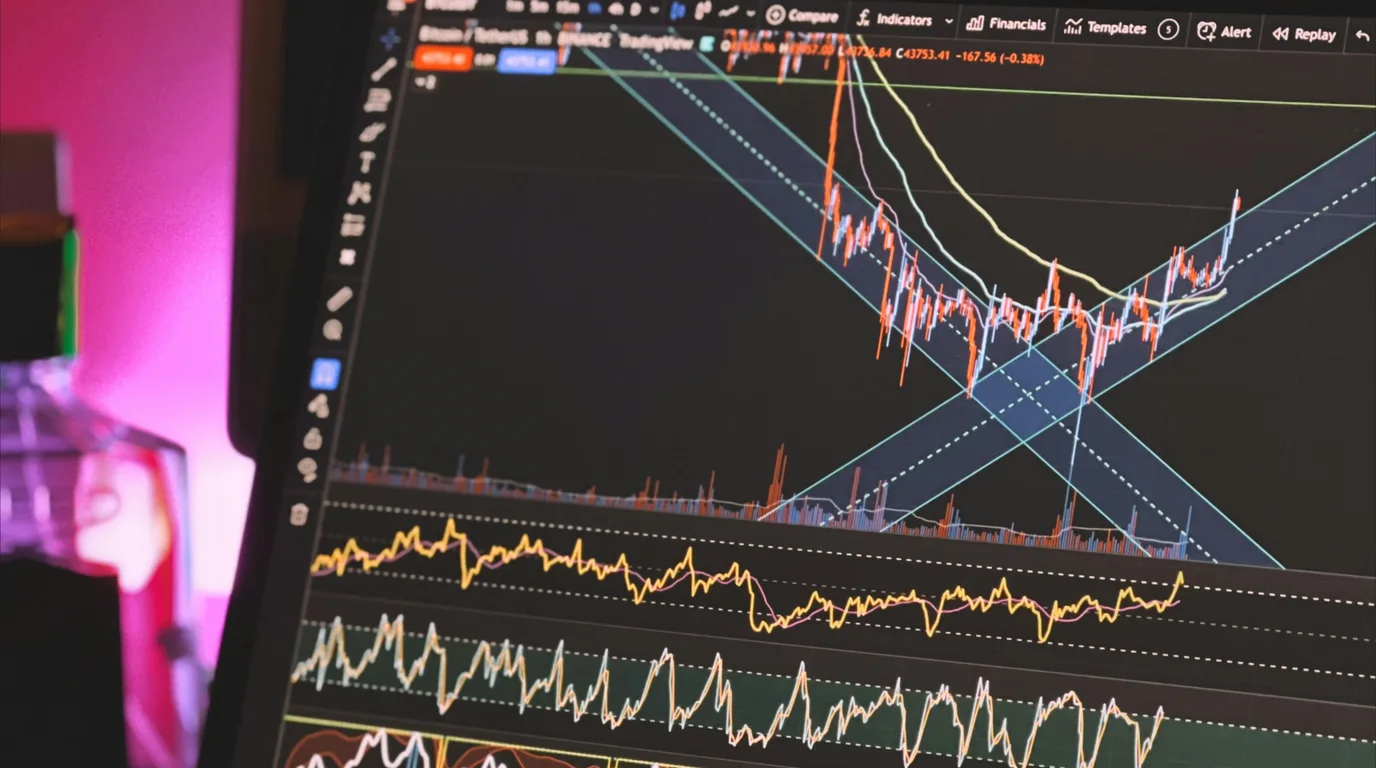
Bitcoin Basics for Beginners
Researched and drafted with AI assistance from published sources; edited and published by NorwegianSpark SA.
Last updated: October 2026 · 9 min read
This article is for informational purposes only and does not constitute financial advice. Always consult a qualified financial adviser before making investment decisions.
Bitcoin is a digital currency that runs on a public ledger kept by thousands of independent computers, with no central bank or company in charge. Only 21 million bitcoins will ever exist, new ones are released to "miners" on a fixed schedule that halves roughly every four years, and each coin divides into 100 million units called satoshis, so you never need to buy a whole one. This guide explains how it works in plain language, the honest case for and against it, your choices for holding it, and the mistakes that cost new holders money.
Bitcoin is where almost everyone's crypto journey begins, and it is worth understanding properly rather than through slogans. At its core, Bitcoin is a decentralised digital ledger — a network of computers that collectively records who owns what, with no central bank or company in control. New coins are created through "mining", and the total supply is capped at 21 million, which underpins the "digital scarcity" argument its supporters make.
How Bitcoin works, in five facts
1. A shared ledger. Every transaction is recorded in blocks that are chained together. bitcoin.org states that "New blocks are added to the blockchain approximately every 10 minutes on average" (bitcoin.org FAQ).
2. A fixed supply. "Only 21 million bitcoins will ever be created", and the number of new bitcoins "is automatically halved over time" until issuance stops (bitcoin.org FAQ).
3. A halving schedule. The reward paid to miners falls by half every 210,000 blocks, approximately every four years: it started at 50 BTC per block in January 2009 and has been 3.125 BTC since the halving at block 840,000 on 20 April 2024 (Bitcoin Wiki). Our halving countdown tracks the next one.
4. Divisible into satoshis. "There are 100,000,000 satoshis in 1 bitcoin" (bitcoin.org FAQ).
5. Confirmations, not instant settlement. Once a transaction is in a block, each later block buries it deeper. bitcoin.org notes that "6 confirmations is often considered to be as safe as waiting 6 months on a credit card transaction", and that each user decides how many confirmations they need.
Worked example: the numbers behind the schedule. At one block every ten minutes there are about 6 x 24 = 144 blocks a day. At 3.125 BTC per block, that is about 144 x 3.125 = 450 new bitcoins a day, and after the next halving about 225. Six confirmations at ten minutes each take about an hour on average, which is why exchanges often credit a Bitcoin deposit within roughly that window rather than instantly.
Worked example: you do not need a whole bitcoin. If one bitcoin were priced at 50,000 euros (an illustrative figure, not a price forecast), 100 euros would buy 100 / 50,000 = 0.002 BTC, which is 0.002 x 100,000,000 = 200,000 satoshis. Prices move constantly, so check the live price on your exchange.
The honest case for and against
The honest case for Bitcoin is that it is genuinely novel: a censorship-resistant, borderless way to hold and move value that no single entity controls, with a fixed supply in a world of expanding money. The honest case against is equally real: it is highly volatile, its energy use is debated, it processes few transactions per second on its base layer, and its "store of value" thesis is still unproven over a full economic cycle. A balanced beginner holds both ideas at once.
| For | Against |
|---|---|
| Fixed, published supply of 21 million | Price can halve or worse within a year |
| No central operator can freeze the network | Lost keys or mistaken transfers cannot be reversed |
| Works across borders, every day of the year | Few transactions per second on the base layer |
| Can be held without any intermediary | Energy use is a live public debate |
Before any of that, internalise volatility and risk — Bitcoin has had multiple drawdowns of more than 70%: about 84% from December 2017 to December 2018 and about 77% from November 2021 to November 2022, on Coinbase prices published by the Federal Reserve Bank of St. Louis (FRED). For how it compares with the traditional store of value, see Bitcoin vs gold.
Your custody choices
Practically, getting started means understanding where to buy and hold it. That begins with choosing an exchange for acquisition and, for meaningful amounts, moving to self-custody with a hardware wallet.
| Option | Who holds the keys | Suits |
|---|---|---|
| Exchange account | The exchange | Learning, small amounts, active trading |
| Software wallet | You, on a phone or computer | Small spending balances |
| Hardware wallet | You, on a dedicated offline device | Amounts you plan to keep |
| Spot Bitcoin ETF | A fund's custodian | Exposure inside a brokerage account, no coins to withdraw |
The step-by-step routes are in how to buy Bitcoin as a beginner, how to set up a crypto wallet and our comparison of Bitcoin ETFs.
Mistakes that cost new holders money
Frequently asked questions
What is Bitcoin in simple terms?
A digital currency recorded on a public ledger maintained by a network of independent computers, with no central bank or company in control. Its supply is capped at 21 million coins, released on a fixed, halving schedule.
Do I have to buy a whole bitcoin?
No. One bitcoin divides into 100,000,000 satoshis, so you can buy any small amount your exchange allows; at an illustrative price of 50,000 euros, 100 euros buys 200,000 satoshis.
What is the Bitcoin halving?
Every 210,000 blocks, roughly every four years, the reward paid to miners for each new block halves. It started at 50 BTC in 2009 and has been 3.125 BTC since April 2024, which cuts new supply to about 450 bitcoins a day.
How long does a Bitcoin transaction take?
A new block arrives about every 10 minutes on average. Many services wait for several confirmations; six, a common threshold, take about an hour on average.
Is Bitcoin a safe investment?
It is a high-risk, highly volatile asset that has fallen about 84% and about 77% in past cycles. Only invest what you can afford to lose, start small, and understand custody before you hold meaningful amounts.
What You Are Actually Holding
The single idea that clears up most beginner confusion: you do not hold coins, you hold
the ability to authorise a transfer. A wallet stores keys, not money, and the ledger
that records balances lives on thousands of machines rather than in the wallet.
Three consequences follow, and all three surprise people:
restore it, because there is no institution.
Sending to a wrong address is final.
movement is permanently visible to anyone who looks.
The mechanics are worth working through once at
how to move crypto to self-custody.
Custody: The First Real Decision
| Where it sits | Who controls the keys | What can go wrong |
|---|---|---|
| On an exchange | The exchange | Failure, freeze, or fraud at the venue |
| A software wallet on your phone | You | Device loss, malware, a mistyped address |
| A hardware wallet | You | Losing both the device and the recovery phrase |
| Split between several | Deliberate | Complexity, which is its own risk |
There is no answer that removes risk; there is only a choice about which risk you prefer
and can manage. Exchange custody trades counterparty risk for convenience, and
self-custody trades convenience for personal responsibility that nobody else can cover.
What actually happens when the first option fails is set out in
what happens if a crypto exchange collapses.
The Mistakes That Cost Beginners Money
then send the rest. This one habit prevents the most expensive category of error.
document is the commonest way self-custody fails.
legitimate needs your recovery phrase — see
crypto security: avoiding scams.
including swapping one asset for another. See
is the only defence against your own reaction.
Sizing It Honestly
Whatever the case for the asset, the volatility is real and drawdowns have historically
been deep and long. The only sound planning assumption for a beginner is that any
position could fall very substantially and stay there for years. Size accordingly, use
money you will not need, and treat any framing that skips this as marketing rather than
analysis — the reasoning is in
understanding crypto volatility risk.
The bottom line
Bitcoin is the foundation the rest of the space is built on; once it makes sense, Ethereum and smart contracts is the natural next topic. If you want the complete first-purchase walkthrough, read how to buy crypto in 2026.
Understand both the case for and against, and start small. Coinbase and Kraken Pro are two regulated venues where you can buy and hold spot Bitcoin. Capital at risk; Bitcoin is highly volatile. This is not financial advice.
Sources
- •bitcoin.org FAQ (bitcoin.org)
- •Bitcoin Wiki (en.bitcoin.it)
- •FRED (fred.stlouisfed.org)
Related Articles
CeFi vs DeFi: The Trade-Off Between Convenience and Control
CeFi vs DeFi explained: who holds your crypto, what can go wrong in each, recourse, KYC, and how to choose between them. Not advice; capital at risk.
Crypto CFDs vs Owning Crypto: What's the Difference? (2026)
Crypto CFD vs owning the coin: ownership, leverage, overnight costs, the EU 2:1 cap, and CFDs vs futures and ETFs. Most retail CFD accounts lose money.
Bitcoin vs Ethereum vs Solana: How the Big Three Actually Differ
Bitcoin vs Ethereum vs Solana compared: consensus, supply, fees and trade-offs, and which job each chain is built for. Not advice; capital at risk.