AI Crypto Trading in 2026: What the Tools Do and Where They Fail
Researched and drafted with AI assistance from published sources; edited and published by NorwegianSpark SA.
Last updated: November 2026 · 9 min read

This article is for informational purposes only and does not constitute financial advice. Always consult a qualified financial adviser before making investment decisions.
Not financial advice. Crypto is volatile and you can lose money. Capital at risk.
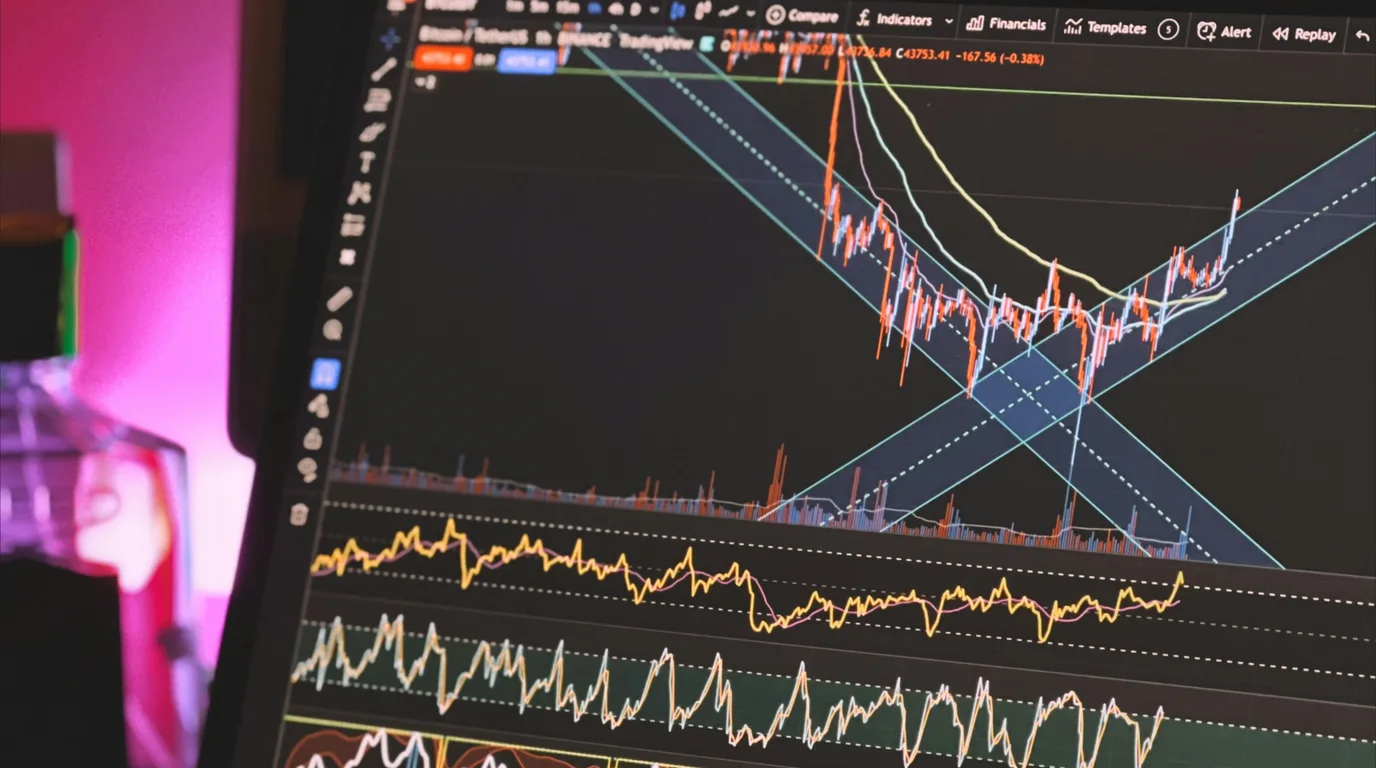
AI crypto trading tools in 2026 are good at one thing: processing more information than a person can read — social chatter, on-chain flows, price data — and turning it into scores, alerts and charts. They are not good at predicting the future. The US Commodity Futures Trading Commission puts it bluntly in its customer advisory on trading bots: "AI technology can't predict the future or sudden market changes." So the useful question is not "which AI tool makes money" but "which job do I want a tool to do, and how do I stop a tool, or a scammer using the word AI, from doing damage?"
What AI actually does in crypto trading
Sentiment analysis. Language models read posts on social platforms, forums and messaging channels and score whether the mood around a coin is turning positive or negative. This is a speed advantage at reading, not a forecast: crowds are often loudest at tops and bottoms, so sentiment works best as context alongside price, not as a trigger on its own.
On-chain pattern recognition. Models can scan blockchain data for patterns such as large wallets accumulating, coins moving to or from exchanges, or long-dormant coins waking up. Our guide to on-chain analysis explains what those signals mean and how they mislead.
Leverage and liquidation monitoring. By tracking open interest and funding across derivatives venues, tools try to show where forced selling or buying could cluster. That describes risk in the market; it does not tell you when the cascade will start.
Signals and bots. At the far end are products that turn a model's output into buy and sell calls, or place trades automatically. This is where the risk concentrates, because performance claims are easy to make and hard to verify — the section on paid signals and bots below covers how to test them.
The main kinds of AI tools for crypto analysis
Rather than a ranking we cannot test, here is what each category is for, with examples described in the providers' own words:
| Tool type | What it does | Examples (how they describe themselves) | Watch out for |
|---|---|---|---|
| On-chain and market data | Dashboards, metrics and alerts built on blockchain and exchange data | Glassnode: market intelligence that "integrates spot, futures, options, ETFs, DATs, and on-chain data"; Santiment: "social, blockchain, financial, dev, and community metrics" | Metrics need interpretation; the same chart can be read both ways |
| Charting and custom scripts | Indicators and strategies you build or borrow, with backtesting | TradingView's Pine Script, which lets traders "create their own trading tools and run them on our servers"; its docs cite more than 150,000 published community scripts | Anyone can label a script "AI"; a good backtest is not live performance |
| AI ratings and signals | Scores, grades or buy/sell calls generated by a model | Subscription rating and signal services | Unverified track records; survivorship in showcased results |
| Automated trading bots | Software that places trades for you via exchange API keys | Exchange-built and third-party bots | API key permissions; strategies that fail when the market regime changes |
Where AI fails in crypto
AI excels at pattern recognition in conditions that resemble its training data. It struggles with:
The honest assessment: AI tools can give you better information and save time, not guaranteed profits. Your own discipline matters more — see crypto trading psychology and understanding crypto volatility and risk.
Red flags regulators warn about
The CFTC advisory describes scams that claim AI algorithms can generate "huge returns—sometimes tens of thousands of percent—or yield 100 percent 'win' rates". It cites the Mirror Trading International case, in which customers lost "nearly 30,000 bitcoins—worth about $1.7 billion at the time". Before you trust any bot or signal provider, the advisory suggests you:
Two extra rules of our own: never give a bot API keys with withdrawal permission, and never send funds to a "platform" you found through a stranger's message.
Paid signals and trading bots: what the marketing hides
Paid signal groups, "guru" channels and automated bots sell one promise: pay, and you will be told what to trade. The structural problem is simple. Anyone holding a consistent, edge-giving signal would gain more by trading it than by selling it for a subscription, and "verified results" shown as screenshots are easy to cherry-pick. A bot does not change that: it only executes a strategy, and a losing strategy automated loses faster. Assume a signal service does not work until it proves otherwise.
How a genuine record can still mislead. The commonest way a signal service produces an impressive record is not fabrication but selection:
Nothing is faked; the record is real for the people shown it. The same effect occurs when a provider deletes losing calls, restates entries after the fact, or publishes only the channel that happened to do well. The defence is structural: only a full, timestamped record published before the fact means anything. Everything else is a selected sample.
| The claim | What would have to be true |
|---|---|
| A high win rate | Meaningless without the average size of wins and losses |
| "Verified results" | Verified by whom, over what period, including the losing calls |
| "Backtested" | Curve-fitting produces excellent backtests with no forward value |
| "My students made X" | Selected from all students; the others are not shown |
| "Limited spots" | A scarcity device; one more subscriber costs the seller nothing |
| "Free channel, paid tier" | The free tier is the selection mechanism above |
A win rate without position sizing is the most misleading number in trading: a strategy that wins nine times out of ten and loses more on the tenth is a losing strategy.
Two arrangements to refuse outright. Payment in crypto to a personal address leaves no recourse, no chargeback and no identifiable seller. And a service that asks for exchange API keys able to trade or withdraw on your account is asking for control of it; if you run a bot yourself, keep its key trade-only. A legitimate service takes ordinary payment through an identifiable company.
If you still want to test one:
If what you are really after is a community rather than a signal feed, apply the same checks: our comparison of four crypto trading communities on Whop and our Freedom Academy review show what each discloses and what is missing. The same scepticism applies to funded-account challenges and to handing your trades to someone else through copy trading.
Frequently asked questions
Are paid crypto signals worth it?
Rarely. Most cannot show a complete, timestamped record published before the fact, and a record built from selected channels or deleted losing calls can look impressive without any edge behind it. If you test one, paper-trade every call for a few months, count fees and slippage, and never pay in crypto to a personal address or hand over API keys that can trade or withdraw.
Can AI predict crypto prices?
No tool can reliably predict prices. AI can process large amounts of data and highlight patterns, but the CFTC states that AI "can't predict the future or sudden market changes", and crypto is prone to exactly those sudden changes.
What are the best AI tools for crypto trading analysis?
It depends on the job. On-chain and market-data platforms such as Glassnode and Santiment help you read what is happening; charting platforms such as TradingView let you build and backtest your own indicators. Treat signal and rating services with the most caution, because their track records are the hardest to verify.
Are AI crypto trading bots worth it?
A bot only automates a strategy; it does not make a bad strategy good. If a bot or its seller promises high or guaranteed returns or near-perfect win rates, regulators treat that as a red flag of fraud. If you use one, start small, keep API keys trade-only and review results against simply holding.
Is copy trading the same as AI trading?
No. Copy trading mirrors another person's trades rather than a model's output, with its own risks — see our copy trading guide.
Your next step
Before using any tool, make sure the platform you trade on passes basic checks — our 8-point exchange check covers licensing, custody and withdrawals. Start with analysis tools that inform your decisions rather than bots that make them for you.
Capital at risk. This is general information, not financial advice.
Related Articles

NFTs in 2026: What Survived the Crash and What's Actually Useful
Are NFTs dead in 2026? The speculative boom of 2021-22 collapsed, but ticketing, credentials, gaming items and provenance survive. What to check first.
Altcoin Investing in 2026: Strategy Over Speculation
Altcoin investing strategy: a research framework, token supply checks, sizing for coins that can go to zero, and when to hold or sell. Capital at risk.

Crypto Wallet Security in 2026: Hardware, Software and Common Mistakes
Crypto wallet security in 2026: hardware vs software wallets, seed phrase storage, and the phishing and SIM-swap attacks that target retail holders.