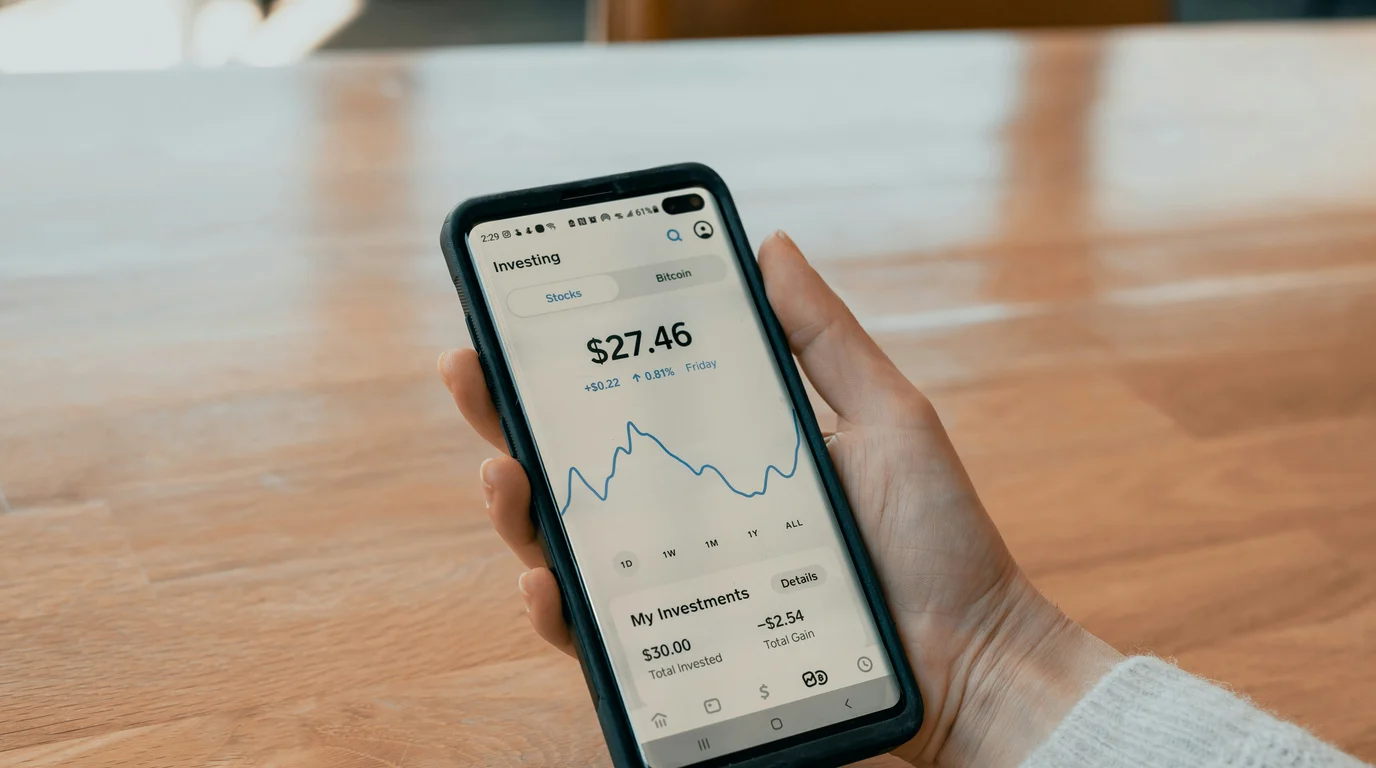
Robo-Advisor vs Financial Advisor: Which Is Right for You?
Written with AI assistance and reviewed by the NorwegianSpark SA editorial team.
Last updated: June 2026 · 14 min read
This article is for informational purposes only and does not constitute financial advice. Always consult a qualified financial adviser before making investment decisions.
Capital at risk. Investing involves risk, including the possible loss of the money you put in. Past performance does not guarantee future results. This article is general information to help you compare options — it is not personalised financial advice. The right choice depends on your own circumstances.
Choosing between a robo-advisor and a human financial advisor is one of the first real decisions you face once you have money to invest rather than just save. Both are legitimate. Neither is "better" in the abstract — the honest answer depends on how complex your finances are, how large your portfolio is, and how you behave when markets fall.
We've spent years comparing investment platforms at YieldNav, and we'll be straight about something most comparison sites bury: for a lot of people, a low-cost robo-advisor does 90% of what a human advisor does, for a quarter of the price. But there is a real 10% — and for some people that 10% is worth more than every basis point they'll ever save. This guide is about telling those two groups apart.
The 30-second answer
The rest of this article shows the actual costs, the evidence behind each side, and a decision framework so you can place yourself.
Is a "financial advisor" the same as a "financial planner"?
People search for both, so let's clear this up before going further, because it changes what you're comparing. In everyday use, "financial advisor" and "financial planner" are often the same person — both terms describe a human professional who helps you manage money. The meaningful distinctions are not in the job title but in two things:
So when you compare "robo-advisor vs financial advisor" or "robo-advisor vs financial planner," you are really comparing an algorithm vs a human professional — the title the human uses matters far less than whether they're a fee-only fiduciary. We'll use "financial advisor" from here to mean the human, planner or otherwise.
What is a robo-advisor?
A robo-advisor is an automated investing service. You answer a questionnaire about your goals, time horizon and risk tolerance; an algorithm builds you a diversified portfolio — usually from low-cost index ETFs — and then handles the ongoing work: automatic rebalancing, dividend reinvestment, and (on some platforms) tax-loss harvesting. There's no human picking stocks and, on the cheapest tiers, no human you speak to.
The appeal is that the boring, valuable parts of investing — diversification, staying invested, rebalancing on schedule — get done mechanically, cheaply, and without emotion.
What robo-advisors actually cost in 2026
Fees change, so treat these as a snapshot to verify against each provider's current schedule before you sign up.
Sources: provider fee schedules and NerdWallet's 2026 robo-advisor coverage (see Sources). These are US platforms; equivalent robos exist in other markets — verify local fees. The headline lesson: most quality robo-advisors charge around 0.25% of assets per year, and a couple charge less. Schwab's "$0 fee" is real but not free — the forced cash allocation is an indirect cost that can quietly offset the saving, especially in a higher-rate environment.
| Robo-advisor | Annual fee | Minimum | The catch |
|---|---|---|---|
| Vanguard Digital Advisor | About 0.15%, capped around 0.20% all-in | $3,000 | None stated. The lowest headline advisory fee of the major US robos |
| Betterment Digital | 0.25%, or a small flat monthly fee on low balances | None | None stated |
| Wealthfront | 0.25% | $500 | None stated. Long-standing automated tax-loss harvesting |
| Schwab Intelligent Portfolios | $0 advisory fee | $5,000 | A mandatory 6–10% cash allocation creating cash drag, and tax-loss harvesting only above $50,000 |
Fees change; verify against each provider's current schedule before signing up. These are US platforms, and equivalent robos elsewhere carry their own local fees.
What a human financial advisor costs
The most common pricing model is a percentage of assets under management (AUM). According to Kitces Research, around 86% of advisors use AUM as their primary pricing method, and the long-standing "1%" rule of thumb still holds up: the Envestnet | MoneyGuide 2026 State of Financial Planning Fees Study — a Q1-2026 survey of 491 advisors — found the average AUM fee is 0.96%. Tellingly, AUM was the only fee model showing any compression, easing from 1.05% the prior year.
Fees typically tier down as your balance grows. Kitces Research data puts the median AUM fee at roughly 1.0% up to $1 million, easing to about 0.9% at $2 million and 0.8% at $5 million, with averages dropping toward 0.5% only for the largest high-net-worth portfolios. Some advisors instead charge flat, hourly, or project fees — often a better deal if you mainly want a plan rather than ongoing management.
The cost difference, shown honestly
Cost is the clearest difference, and over decades it's large. Take a $500,000 portfolio:
Here's the part comparison sites skip: that $3,750 isn't just a yearly expense — it's money that's no longer compounding for you. If that difference were instead left invested and grew at, say, 6% a year, the cumulative drag over 20 years runs well into six figures — on a $500,000 portfolio it can exceed $100,000. (That's an illustration, not a promise: it assumes a steady balance and return, which real life never delivers. Run your own numbers with your real balance and a conservative return.)
This does not mean human advisors aren't worth it. It means the bar is clear: a human advisor needs to add more value than they cost. The next two sections are about whether they can.
Where robo-advisors genuinely win
Low-cost diversification, done right. A robo builds the same kind of globally diversified, low-cost index portfolio a good fee-only advisor would — for a quarter of the price. For straightforward portfolio management, the algorithm does what a human would do, cheaper.
Discipline without emotion. A robo-advisor never panics, never chases a hot stock, and never "forgets" to rebalance. For many investors, mechanical consistency beats their own judgement — more on why in the next section.
Low barriers to entry. With minimums from $0 to a few thousand dollars, professional-grade portfolio management is now accessible to people just starting out.
A fair word on tax-loss harvesting. Robos heavily market automated tax-loss harvesting (TLH) as a return booster. Be skeptical of the headline numbers. Providers' own materials claim wide ranges — Wealthfront has cited roughly 0.73%–2.6% and Betterment around 0.77% — but independent analysts (CNBC's 2018 reporting, Michael Kitces, and the White Coat Investor among them) argue these figures are routinely overstated: they can suffer from timeframe and portfolio bias, they often present a tax deferral as if it were a permanent gain, and the benefit shrinks — or reverses — if your tax rate is higher when you eventually sell. TLH is a genuine, modest perk for taxable accounts in higher brackets. It is not a reason on its own to choose one platform, and it does nothing in a tax-sheltered retirement account.
Where a human advisor earns the fee
Complex, interconnected planning. If you own a business, have equity compensation, are navigating a divorce, have estate-planning needs, or are building a retirement-income withdrawal strategy, these decisions interact in ways no questionnaire captures. This is the human's home turf, and it's where the fee is easiest to justify.
Behavioural coaching — the most valuable and least visible service. The single biggest argument for a human is that they can stop you from sabotaging yourself. Two pieces of evidence, presented with their caveats:
If you know you're the kind of person who'd sell everything in a 30% crash, a single phone call from an advisor that stops you could be worth more than a decade of their fees. If you're the kind who'd shrug and keep buying, you may not need to pay for that.
Accountability and relationship. Some people simply invest more consistently when a real person knows their full picture and holds them to a plan. That's a legitimate reason to pay for a human — and a hard one to get from an app.
The hybrid option — increasingly the default
The line between robo and human is blurring. Hybrid services pair automated portfolio management with access to human advisors: Vanguard Personal Advisor, Betterment Premium, and Schwab Intelligent Portfolios Premium all sit in this space, typically charging around 0.30%–0.40% (verify current pricing and any minimums before committing). For a large middle group — enough assets and complexity to want occasional human input, but not enough to justify a full 1% advisor — a hybrid is often the most sensible answer.
A decision framework
Place yourself honestly against these:
Lean robo-advisor if most of these are true:
Lean human advisor if several of these are true:
Lean hybrid if you're in between — some complexity, a mid-sized portfolio, and a wish for occasional human input without paying a full 1%.
How we'd actually decide
Between the two of us, our backgrounds shape how we look at this. Øyvind spent years in insurance and debt counselling, and the through-line of that work was watching people make costly money decisions on bad information — which is exactly the failure a behavioural coach exists to prevent. Thomas comes at it from the opposite end: an ex-electrician and builder who learned to be ruthless about paying for what you actually use, not what sounds reassuring.
Put those together and our honest take is this: start cheap and automated, and pay for a human the moment your life — not your portfolio's size alone — gets complicated. A 28-year-old with a steady salary and a $40,000 portfolio paying 1% for "advice" is usually paying for comfort, not value; a robo serves them better. A 55-year-old selling a business with equity comp and three kids' inheritances to think about is under-served by any algorithm, and a fee-only fiduciary is money well spent. The worst choice, for either of them, is to be so paralysed by the decision that the money sits in cash doing nothing.
If you're still weighing whether the fee is worth it at all, we go deeper on that exact question in are robo-advisors worth the fee. And once you've decided a robo is right, you can compare the best robo-advisors side by side.
Common questions
Is a financial planner the same as a financial advisor?
In practice, usually yes — both describe a human professional who helps manage your money. What matters more than the title is whether they're a fee-only fiduciary (legally bound to act in your interest and paid only by you). See the section above for the distinction that actually affects you.
Are robo-advisors safe?
The investing risk is the same as any diversified portfolio — your balance can fall. On the custody side, reputable robo-advisors hold your assets with regulated, insured custodians (in the US, SIPC protects against broker failure, though not against market losses). Check the specific provider's regulation and protection scheme for your country before depositing.
Can I use both?
Yes, and many people do — a robo for the core, low-cost portfolio, and an hourly or flat-fee planner for a one-off plan or big life events. You don't have to hand your whole financial life to one model.
Does paying more for a human guarantee better returns?
No. A human advisor's value comes mainly from planning and from preventing behavioural mistakes — not from beating the market. Be wary of anyone who promises outperformance.
About this article
This article was produced by Daniel Marchetti — written with AI assistance and reviewed by the NorwegianSpark SA editorial team. YieldNav is operated by NorwegianSpark SA (org. 834 984 172), a Norwegian company founded by Thomas Løvås Lokøy and Øyvind. We are not licensed financial advisers, and nothing here is personalised advice — we compare platforms so you can make your own informed decision. Read more on our about page and our affiliate disclosure.
Sources
Advertisement
Related Articles
Crypto Portfolio Allocation: How Much Is Too Much?
A framework for deciding what percentage of your portfolio should be in cryptocurrency — based on risk, goals, and financial stability.

REITs Explained: Earn Passive Real Estate Income Without Owning Property
Learn how Real Estate Investment Trusts work, why they pay high dividends, and how to add real estate exposure to your portfolio.

How to Buy Bonds Online: A Practical Guide for New Investors
Learn the different types of bonds, where to buy them, and how they fit into a balanced investment portfolio.