How to Invest in ETFs: Step-by-Step Guide for Beginners
Researched and drafted with AI assistance from published sources; edited and published by NorwegianSpark SA.
Last updated: October 2026 · 9 min read
This article is for informational purposes only and does not constitute financial advice. Always consult a qualified financial adviser before making investment decisions.
Exchange-Traded Funds (ETFs) have transformed investing by making diversification simple, affordable, and accessible to everyone. If you've been meaning to start investing but feel overwhelmed by the idea of picking individual stocks, ETFs are almost certainly where you should begin. This guide walks you through the entire process from start to finish.
What Exactly Is an ETF?
An ETF is a basket of securities — stocks, bonds, commodities, or a mix — that trades on a stock exchange just like an individual stock. When you buy one share of an S&P 500 ETF, you're effectively buying a tiny slice of all 500 companies in the index. This instant diversification is the core appeal.
Unlike mutual funds, ETFs trade throughout the day at market prices. You can buy and sell them anytime the market is open, and most major ETFs have extremely tight bid-ask spreads, meaning you won't lose much to trading costs.
Step 1: Open a Brokerage Account
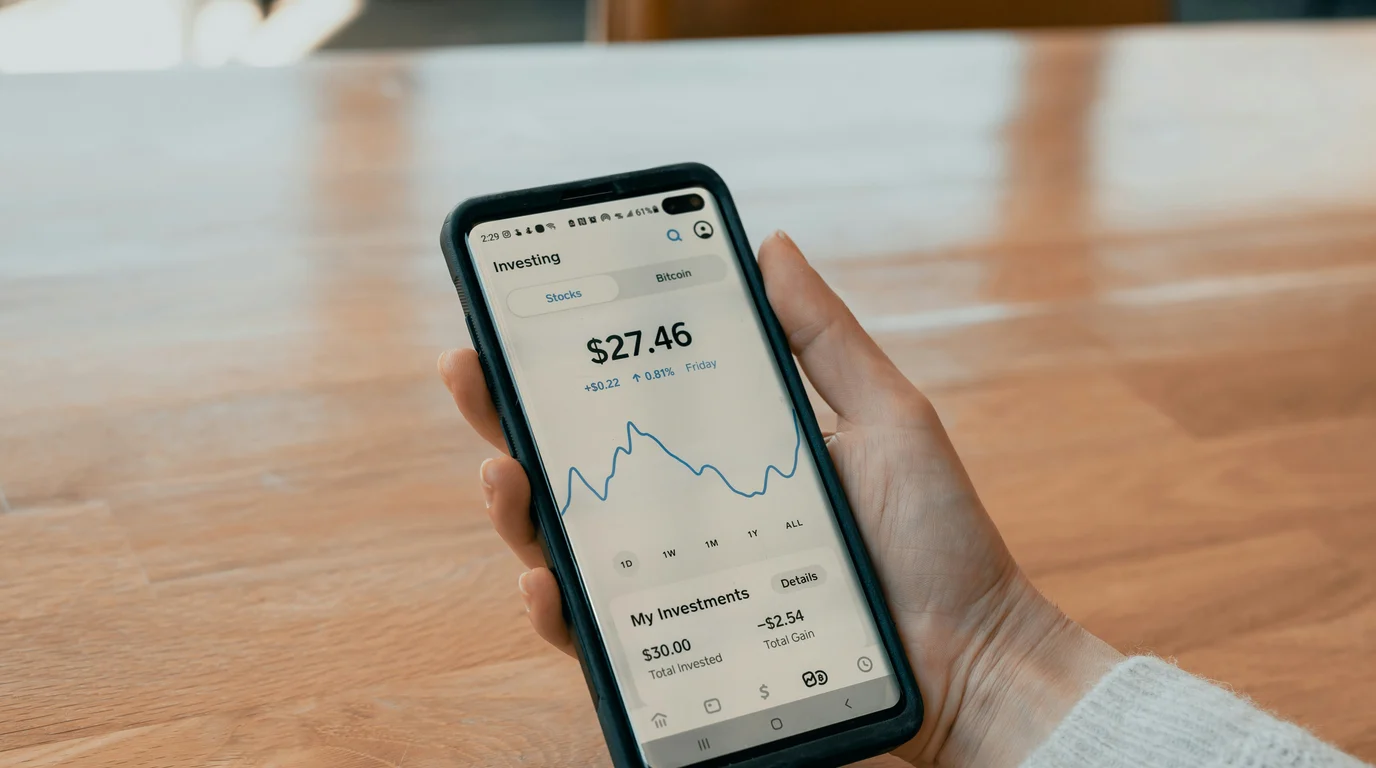
You need a brokerage account to buy ETFs. If you don't already have one, the process is straightforward and typically takes under 15 minutes. Brokers like Fidelity, Charles Schwab, and Vanguard all offer commission-free ETF trading and have no account minimums. If you are comparing brokers, our broker checklist shows how to price your own trades and check what protection applies.
You'll need to provide your Social Security number, date of birth, employment information, and bank account details for funding. Once approved — usually within one business day — you can transfer money and start investing.
Step 2: Fund Your Account
Transfer money from your bank account to your brokerage. ACH transfers are free and typically take 1-3 business days. Many brokers offer instant buying power while the transfer settles, so you may not need to wait.
How much should you start with? There's no wrong answer. With fractional shares available at most brokers, you can buy ETFs with as little as $1. That said, starting with at least $500-$1,000 gives you enough to build a meaningful initial allocation.
If your chosen ETF trades in a currency different from your bank account — for example a USD-listed ETF and a euro account — converting through your bank can carry a marked-up exchange rate. Some investors hold and convert money in a multi-currency account such as Wise, which says it uses the mid-market rate and charges a conversion fee that varies by currency, before funding their broker. Note that Wise is an e-money account, not a bank, so balances are safeguarded rather than deposit-guaranteed — it is a currency tool, not a savings account. Check your broker's own deposit and in-app conversion options first, as many now offer competitive rates.
Step 3: Choose Your ETFs
This is the step where most beginners get stuck, because there are over 3,000 ETFs available. Here's how to narrow it down.
For most beginners, a simple three-fund portfolio is ideal:
1. US Total Stock Market ETF (e.g., VTI or ITOT) — Covers the entire US stock market, roughly 3,500-4,000 companies. This is your core growth engine.
2. International Stock ETF (e.g., VXUS or IXUS) — Covers developed and emerging markets outside the US. Important for diversification, since the US won't always be the best-performing market.
3. US Bond ETF (e.g., BND or AGG) — Provides stability and income. Bonds tend to hold up better during stock market downturns.
A common allocation for a younger investor might be 60% US stocks, 30% international stocks, and 10% bonds. As you get closer to retirement, you'd gradually increase the bond allocation.
Step 4: Place Your Order
Buying an ETF is just like buying a stock. Search for the ETF's ticker symbol (e.g., VTI), enter the number of shares (or dollar amount for fractional shares), and choose your order type.
Market order: Buys immediately at the current price. Best for highly liquid ETFs during normal market hours.
Limit order: Sets a maximum price you're willing to pay. The order only fills if the price reaches your limit. This gives you more control but might not fill immediately.
For most beginners buying major ETFs, a market order during regular trading hours is perfectly fine.
Step 5: Set Up Automatic Investments
The real power of ETF investing comes from consistency. Set up automatic recurring investments — most brokers let you schedule weekly, bi-weekly, or monthly purchases. This is dollar-cost averaging in action: you buy more shares when prices are low and fewer when prices are high, averaging out your cost over time.
Even $100 per month, invested consistently over decades, builds substantial wealth. The key is making it automatic so you don't need willpower or timing to stay consistent.
Understanding ETF Costs
ETFs charge an expense ratio — an annual fee expressed as a percentage of your investment. For broad market index ETFs, expense ratios are extremely low. VTI charges 0.03%, meaning you pay $3 per year for every $10,000 invested. Compare that to actively managed mutual funds, which often charge 0.50% to 1.00% or more.
Beyond the expense ratio, there are no hidden fees for most ETFs. No load fees, no redemption fees, no 12b-1 fees. Commission-free trading at major brokers means your only ongoing cost is that tiny expense ratio.
Common ETF Mistakes to Avoid
Over-diversifying with too many ETFs: You don't need 15 different ETFs. Three to five is plenty for most investors. Adding more often just creates overlap.
Chasing performance: The ETF that returned 40% last year won't necessarily repeat. Stick with broad market index funds rather than trying to pick the hot sector.
Trading too frequently: ETFs trade like stocks, but that doesn't mean you should trade them like stocks. Buy and hold. Check your portfolio quarterly at most. Rebalance once or twice a year.
Ignoring tax efficiency: In taxable accounts, be mindful of capital gains distributions. Total market index ETFs are generally very tax-efficient due to the ETF creation/redemption mechanism.
Getting Started Today
Open an account, pick two or three broad-market ETFs, set up automatic investments, and then largely ignore your portfolio. The boring approach — consistent contributions to low-cost index ETFs — is the approach that actually works for the vast majority of investors.
About this article
YieldNav is operated by NorwegianSpark SA (org. 834 984 172), founded by Thomas Lovas Lokoy. We are not licensed financial advisers, and nothing here is personalised advice. Read our about page, editorial policy and affiliate disclosure.
Related reading: How to Invest in Gold: ETFs, Bars, Coins and Miners Compared
Related Articles

How to Buy Bonds Online: Individual Bonds vs Bond Funds
How to buy bonds online three ways — TreasuryDirect, individual bonds via a broker, or a bond fund — with costs, markups and rate risk worked out.

Compound Interest: What It Is, How It Works, and Traps
The arithmetic that makes long-term investing work, the five traps that make compounding charts misleading, and the levers that actually decide your outcome.

High-Yield Savings Accounts: How to Find the Best Rate
What a high-yield savings account is, how much it can earn, what to look for, when to use one (and when not), how to open one and saving across currencies.