Crypto Portfolio Allocation: How Much Is Too Much?
Thomas & Øyvind — NorwegianSpark
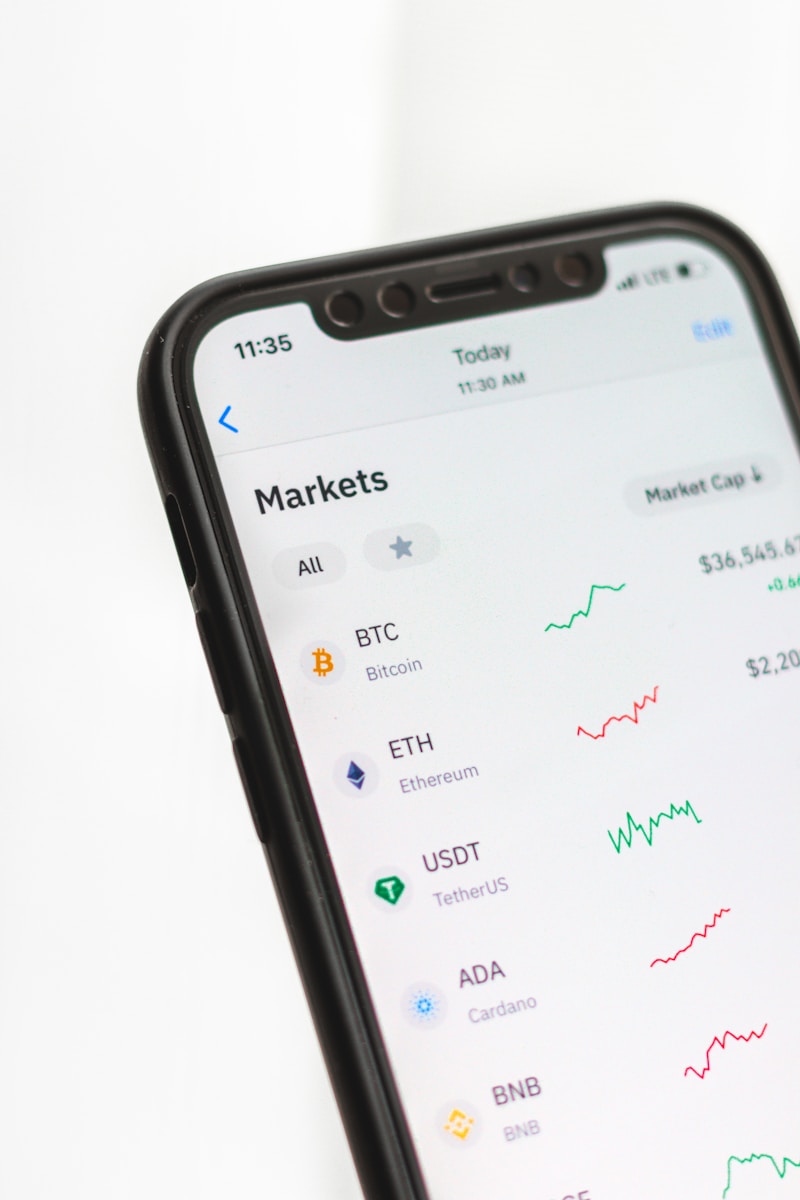
Cryptocurrency has evolved from a niche experiment to a legitimate — if volatile — asset class that most serious investors need to at least consider. The question isn't whether crypto belongs in a portfolio (reasonable arguments exist on both sides), but rather: if you decide to include it, how much is appropriate?
## The Case for Some Crypto Exposure
Bitcoin has been the best-performing asset of the past decade by a wide margin. Even accounting for its notorious volatility — including multiple 50%+ drawdowns — a small allocation to Bitcoin has historically improved portfolio returns without proportionally increasing portfolio risk, thanks to its low correlation with traditional assets.
Beyond returns, cryptocurrency represents a genuinely new asset class: digital, scarce, permissionless, and global. If blockchain technology continues to develop and gain adoption, having zero exposure means missing the upside entirely. A small position lets you participate without betting the farm.
## The Case for Caution
Crypto's track record is short compared to stocks and bonds. Bitcoin has existed since 2009 — a single economic cycle. We simply don't have enough data to make confident claims about long-term risk-adjusted returns. Past performance has been extraordinary, but 15 years is not enough to extrapolate with confidence.
Volatility is extreme. Bitcoin has experienced drawdowns of 50-80% multiple times. Most altcoins have lost 90%+ of their value at some point. If a 50% decline in part of your portfolio would cause you to panic-sell or lose sleep, that allocation is too high.
Regulatory risk remains real. While regulatory clarity has improved significantly, the landscape continues to evolve. Tax treatment, custody rules, and exchange regulations can change and impact the value and accessibility of crypto holdings.
## Allocation Frameworks
### The Conservative Approach: 1-3%
Many traditional financial advisors who acknowledge crypto's potential recommend a 1-3% portfolio allocation. At this level, even a total loss wouldn't materially damage your financial plan, but the upside participation could be meaningful if crypto performs well.
On a $100,000 portfolio, 2% means $2,000 in crypto. If it goes to zero, you've lost $2,000 — painful but not devastating. If it 5x's, you've gained $8,000 — a nice boost to overall returns.
### The Moderate Approach: 5-10%
Investors with higher conviction, longer time horizons, and stronger financial foundations might allocate 5-10%. This provides more meaningful exposure to crypto's potential upside while still keeping the majority of the portfolio in traditional, time-tested asset classes.
At 5-10%, a severe crypto downturn will be noticeable in your portfolio performance but shouldn't derail your financial goals. This allocation makes sense for investors who understand and accept the volatility.
### The Aggressive Approach: 10-20%
Some crypto-native or risk-tolerant investors allocate 10-20% to digital assets. At this level, crypto's volatility will significantly impact your overall portfolio returns. This allocation is only appropriate for investors who have a strong financial foundation (fully funded emergency fund, no high-interest debt, maxed retirement contributions), a long time horizon (10+ years), and genuine understanding of the risks.
### What Most Experts Recommend
If we aggregate guidance from major financial institutions, registered investment advisors, and academic research, the consensus lands around 1-5% for most investors. This range provides exposure without undue risk.
## How to Structure Your Crypto Allocation
If you decide on a 5% crypto allocation, the next question is what to hold.
**Bitcoin (BTC)**: The largest, most liquid, and most established cryptocurrency. It has the longest track record, the widest institutional adoption, and arguably the simplest value proposition (digital gold / store of value). Most conservative crypto allocations are 100% Bitcoin.
**Ethereum (ETH)**: The second-largest cryptocurrency and the foundation for decentralized finance (DeFi), smart contracts, and NFTs. Ethereum represents a bet on the growth of programmable blockchain applications, not just digital scarcity.
**A reasonable split for a 5% crypto allocation** might be: 60% Bitcoin, 30% Ethereum, 10% other established projects — or simply 100% Bitcoin if you prefer maximum simplicity and security.
**Avoid allocating significant portions to small-cap altcoins.** The vast majority of altcoins underperform Bitcoin and Ethereum over full market cycles, and many go to zero. If you want exposure to smaller projects, keep it to a tiny fraction of your overall crypto allocation.
## Where to Hold Your Crypto
**Crypto exchanges** (Coinbase, Kraken, Gemini) are the easiest way to buy and hold. For allocations under $10,000, keeping assets on a reputable, regulated exchange is reasonable. Enable two-factor authentication and use a strong, unique password.
**Hardware wallets** (Ledger, Trezor) provide the highest security for larger holdings. You control your private keys, eliminating exchange counterparty risk. The tradeoff is that you're responsible for securing and not losing your recovery seed phrase.
**Crypto ETFs** (like spot Bitcoin ETFs) allow you to hold crypto exposure in a traditional brokerage account — no wallets, no private keys, no exchange accounts. This is the simplest option for investors who want exposure without dealing with crypto infrastructure.
## Rebalancing Your Crypto Allocation
Crypto's extreme volatility means your allocation will drift significantly. A 5% allocation can become 15% after a rally or 2% after a crash. Rebalancing is essential.
Set a trigger — for example, rebalance whenever crypto exceeds 7% or falls below 3% of your portfolio. When you rebalance, you sell crypto that's appreciated (locking in gains) and buy traditional assets, or vice versa. This systematic approach forces you to buy low and sell high.
## The Bottom Line
There's no universally correct crypto allocation. But there are guidelines:
- Don't invest money you can't afford to lose entirely - Start small (1-3%) and increase only as your understanding and conviction grow - Favor Bitcoin and Ethereum over speculative altcoins - Use tax-advantaged or tax-efficient structures when possible - Rebalance regularly to maintain your target allocation - Never let crypto enthusiasm override diversification principles
Crypto can be a powerful portfolio enhancer at the right allocation — or a portfolio destroyer at the wrong one. Size your position based on what you can withstand, not what you hope will happen.